
Troubleshooting and Repair
Electrical Repair in Coeur d'Alene, ID That Finds the Real Cause
Tripping breakers, dead outlets, flickering lights and buzzing switches, traced to the actual fault and repaired to code. Platinum Electric LLC diagnoses the problem before replacing anything.
Electrical Repair in Coeur d'Alene, ID Starts With a Diagnosis
A symptom and its cause are often in different places. An outlet that stopped working in the bedroom may trace back to a loose connection two rooms away, and a breaker that trips at dinner time may be telling you about a failing appliance rather than a bad breaker. Platinum Electric LLC provides electrical repair in Coeur d'Alene, ID by tracking down the fault first, so the fix lasts.
Repair is about restoring what should already work. If testing shows the wiring itself is worn out across much of the house, we will say so and explain what electrical wiring and rewiring would involve, but we never push a rewire when a targeted repair is the honest answer. Call (208) 277-6157 and describe what you are seeing; the details help us arrive prepared.
Common Electrical Problems We Repair
Most repair calls start with one of a handful of symptoms. Each has several possible causes, which is why guessing at parts rarely solves them.
- A breaker keeps tripping on the same circuit
- Outlets not working in one room or along one wall
- Lights that flicker, dim or surge brightness
- Switches or outlets that buzz, crackle or feel warm
- Half the house losing power while the rest stays on
- A burning or hot plastic smell near a device or the panel
A smell of burning, visible smoke or scorch marks is a safety issue. Turn that circuit off at the breaker if you can do it safely, and call 911 if there is smoke or fire before calling an electrician.
How We Work
Our Electrical Troubleshooting Process
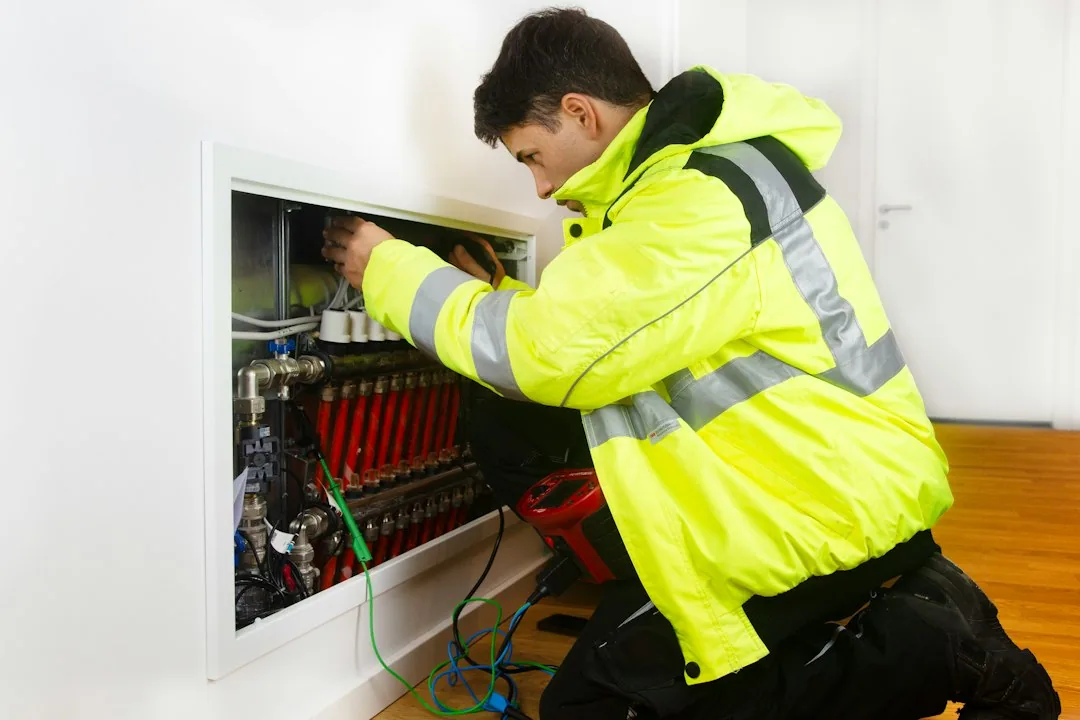
Electrical troubleshooting is a process of elimination. We start with what you have noticed, then test our way from the symptom toward the source until only one explanation fits.
Your Account of the Problem
When did it start, what was running, and does it happen at certain times? Those answers narrow the search before we open a single box.
Testing and Tracing
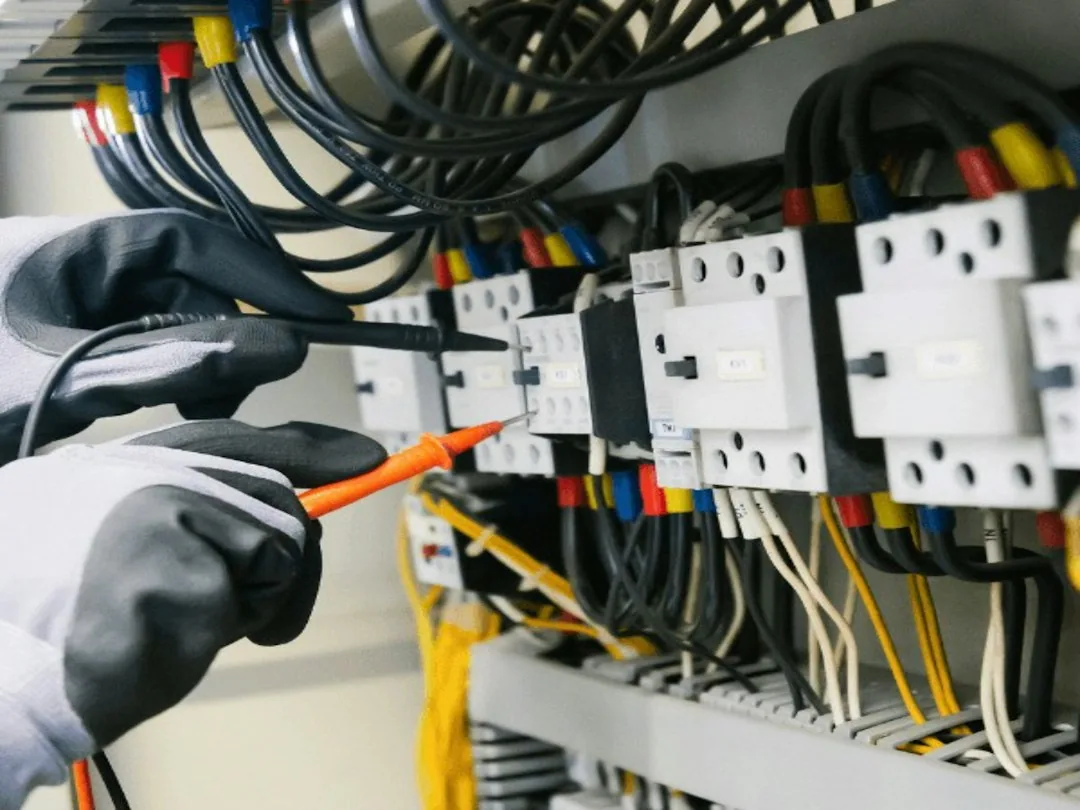
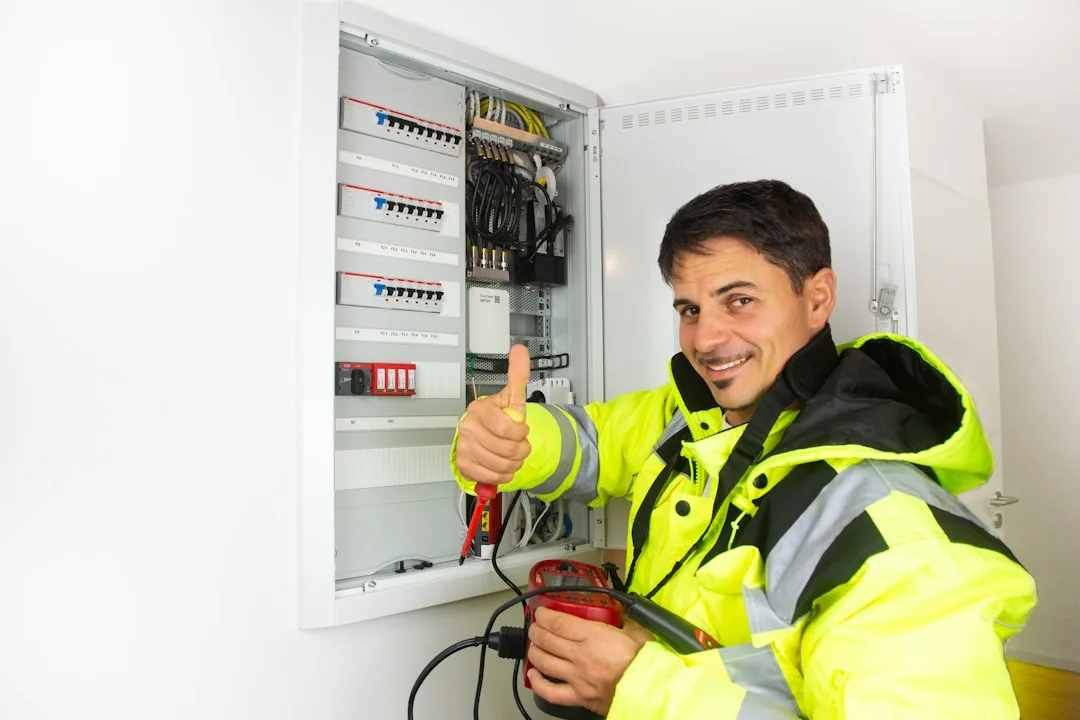
We test voltage, continuity and connections at the panel and along the affected circuit, opening devices and junction boxes to find the fault.
Clear Findings and Options
You hear what failed, why it failed, and what the repair involves before we do it. When there is more than one way to fix it, we explain each.
Repair and Verification
We make the repair, retest the circuit under load, and confirm the symptom is gone. Repairs that require a permit are permitted and inspected.
When a Breaker Keeps Tripping
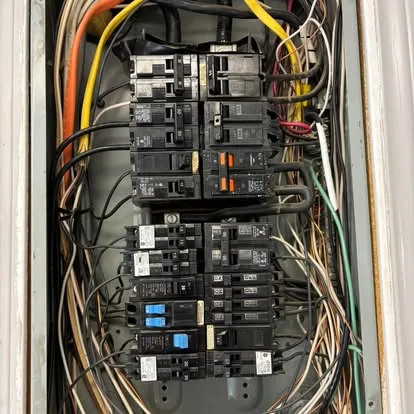
A breaker that trips is doing its job: it shuts off a circuit that is carrying more current than it safely can, or that has a short or ground fault. Resetting it once is reasonable. When the breaker keeps tripping, the cause needs to be found rather than worked around.
The usual suspects are an overloaded circuit, such as a space heater and a hair dryer on the same run, a failing appliance or motor, a short where a wire has been damaged, or moisture in an outdoor box. AFCI breakers, which detect dangerous arcing, can also trip from a loose connection or a worn cord that a standard breaker would never notice.
Occasionally the breaker itself has worn out. We test before replacing it, because swapping a breaker that was tripping for a good reason only hides the problem. If the circuit simply carries too much, a new dedicated circuit may be the right fix.
Outlets Not Working and Lights That Flicker
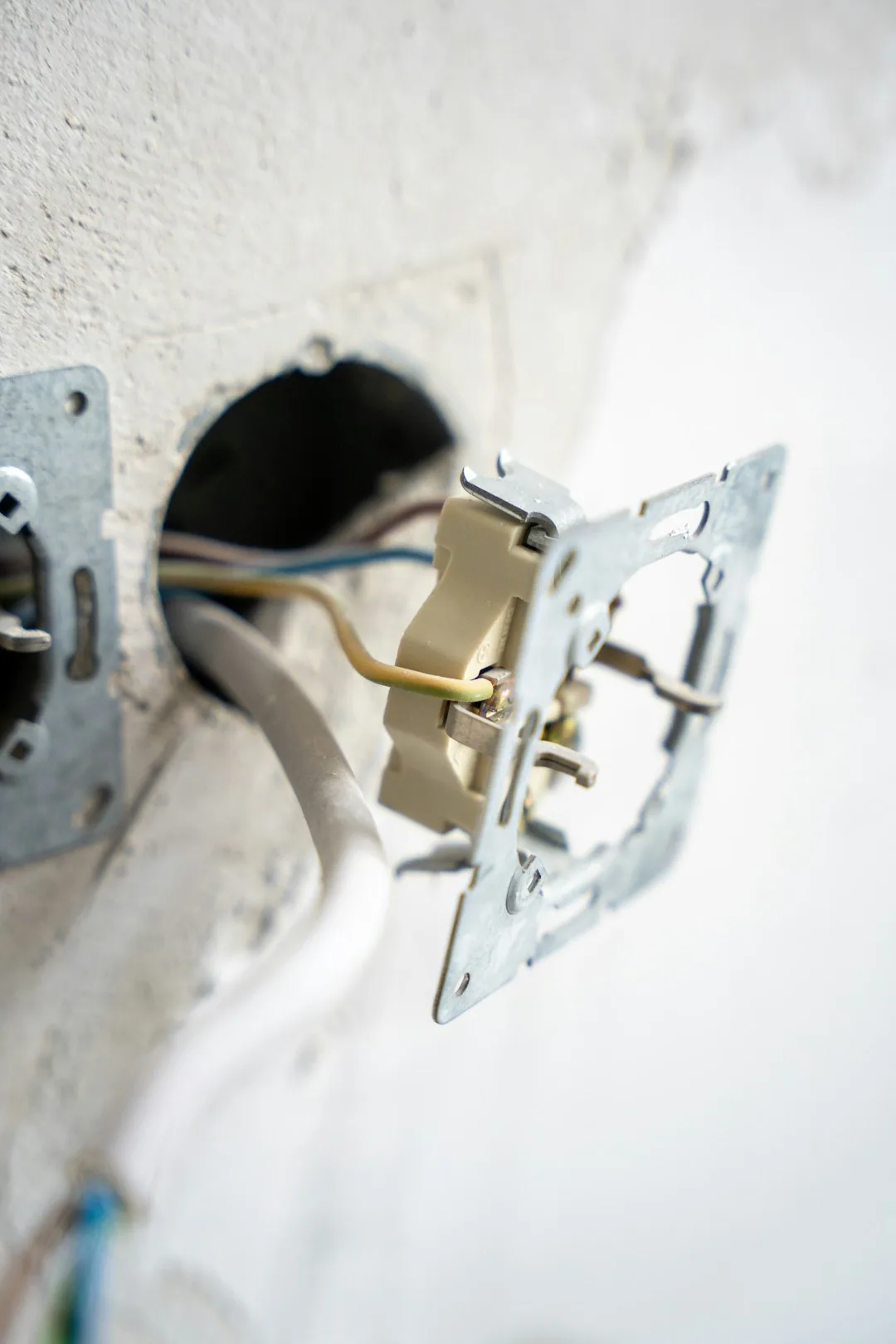
Outlets not working in a row usually share a cause. A tripped GFCI in a bathroom, garage or outside can cut power to other outlets downstream, even in a different room. If resetting every GFCI you can find does not bring them back, the next likely cause is a loose or burned connection at the last working outlet or the first dead one.
Older homes often have outlets wired with push in connections on the back of the device. Those connections loosen over time, and the result is a dead outlet, a warm cover plate or power that cuts in and out. We move those wires to the screw terminals or replace the device.
Flickering lights can come from a loose bulb, a worn switch or a failing fixture. Flicker across several rooms points to a loose connection in the panel or at the service, and that needs prompt attention.
Electrical Diagnostics for Partial Power and Panel Problems
When half the lights go out and the other half stay on, or appliances run weakly, the problem may be on the utility side rather than inside the house. Depending on where you live in the region, electric service comes from Avista or from Kootenai Electric Cooperative, and a loose or damaged service conductor is their equipment to repair. Electrical diagnostics at the meter and panel tell us which side of the line the fault is on.
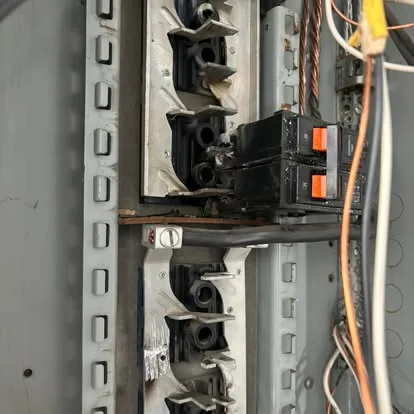
Inside the panel, we look for loose lugs, scorched bus bars, double tapped breakers and signs of moisture. These problems show up as random tripping, warm breakers or a faint buzzing sound. Some panels are worth repairing, while others have outlived their parts or their design and need an electrical panel upgrade, which we currently offer at 10% off. Whichever side the fault is on, you get a straight answer about who needs to fix it.
What Affects the Cost of an Electrical Repair
The time it takes to find the fault is often the largest part of a repair. A dead outlet next to a tripped GFCI takes minutes; an intermittent problem that comes and goes with the weather can take longer to trace, because it has to be caught in the act.
After the diagnosis, the cost depends on the parts and the access. Replacing a device in an open box is quick, while a damaged wire inside a finished wall or ceiling may need to be reached from the attic or crawlspace. Panel repairs depend on the panel's make and the availability of compatible breakers.
We explain the findings and the repair before doing the work, so you are never surprised by the bill for electrical repair in Coeur d'Alene, ID. If more than one problem turns up, we help you decide which to handle first.
Local and Licensed
Why Platinum Electric LLC for Repairs and Diagnostics
A good repair depends on patience and a methodical approach. Platinum Electric LLC is a locally owned, family-owned electrical contractor based in Coeur d'Alene, holding Idaho electrical contractor License #069870, with more than 20 years of electrical experience tracing faults in homes and businesses.
We explain what we find in plain terms, show you the damaged part when it helps, and repair the cause rather than the symptom. Our work is code-compliant and done right the first time, so you are not calling about the same problem next month. You also get a clear record of what was repaired, which helps if the same circuit ever acts up again. See all of our electrical services, and consider whole home surge protection if storms or outages have damaged electronics before.
Troubleshooting Calls Throughout Kootenai County
Repair calls come from every kind of home in the area, from newer subdivisions to rural properties with long service runs and outbuildings fed from the house. Long underground feeders to shops and wells are a common source of hard to find faults on acreage, especially after ground has frozen and thawed.
Along with electrical repair in Coeur d'Alene, ID, we provide troubleshooting as an electrician in Post Falls, ID, an electrician in Rathdrum, ID, an electrician in Spirit Lake, ID and an electrician in Hayden, ID. A short description of the symptom when you call helps us bring the right parts and plan the visit around it. Homeowners across these towns get the same methodical electrical repair in Coeur d'Alene, ID residents rely on, with the fault found before any part is replaced.
Electrical Repair Questions
Is it safe to keep resetting a breaker that trips?
Resetting a breaker once after unplugging a few things is fine. If it trips again soon after, stop resetting it. Repeated tripping means the circuit has an overload, a short or a ground fault, and forcing it back on adds heat and wear to the wiring and the breaker. Leave it off and have the circuit tested to find the cause.
Why did some of my outlets stop working when the breaker is not tripped?
The most common cause is a tripped GFCI outlet elsewhere on the circuit, often in a bathroom, garage or outdoors, that protects the outlets downstream. Check and reset every GFCI first. If that does not restore power, a loose or failed connection at a nearby outlet is the likely cause, and that is worth having repaired before it overheats.
Should I worry about a buzzing sound from an outlet or switch?
Yes. A healthy outlet or switch is silent. Buzzing or crackling usually means a loose connection or a failing device, and both produce heat. Dimmer switches can hum slightly under some loads, which is less concerning, but a buzzing standard outlet should be turned off at the breaker and checked. Warmth or discoloration makes it more urgent.
How do I know if a power problem is the utility's or mine?
If your neighbors are also out, or half your home has power while the other half does not, the utility's service may be at fault. Call your electric utility first in those cases. If only certain circuits are affected and the neighbors are fine, the problem is likely inside your home. Testing at the meter base and panel settles the question quickly.
Can flickering lights be a sign of a serious problem?
Flicker in one fixture is usually a loose bulb, a failing LED driver or a worn switch. Flicker across several rooms, or lights that brighten and dim when large appliances start, can point to a loose connection in the panel or at the service entrance. That kind of fault produces heat and should be diagnosed promptly by a licensed electrician.
What should I tell an electrician when I call for electrical repair in Coeur d'Alene, ID?
Describe what you are seeing, when it started, what was running at the time and whether it happens at certain times. Those answers narrow the search before we open a single box. A short description of the symptom also helps us bring the right parts and plan the visit around it, so we arrive prepared.
Get It Fixed Right
Find the Fault and Fix It for Good
An electrical problem that keeps coming back usually has a cause nobody has found yet. Tell us what you are seeing, when it happens and what else was running, and we will trace it to the source and repair it properly.